The Best Films of 2023
“Part of me thinks that because it was all so idiosyncratic and so wild, it was almost like no one really knew where to start taking it apart. Like, where are you going to start hacking away at how strange it was?” – Greta Gerwig on the lack of studio notes for Barbie
“I know audiences are underestimated. I’ve examined this my whole life: Audiences perceive way more than people think they do.” – Michael Mann
“When I finished watching the movie, I was pretty sure I didn’t like it, but when I woke up the next morning, I realized I loved it. Suffer for cinema! Sometimes it’s worth it!” – John Waters
“No hard drugs and no superhero movies.” – Leonard DiCaprio’s advice to Timothee Chalamet
Well, I guess since this is a post about the best films of 2023, it’s only right to start with the bright pink elephant in the room. By now everyone with a pulse (and even some without) has seen Barbie. The highest opening for a female director ever! The highest non-Marvel, non-Star Wars weekend ever! The highest rated film to also include prominent product placement of the new Chevy 4x4s! So. Many. Superlatives. The weekend when Barbie and Oppenheimer dropped was the increasingly rare moment when film was at the center of the culture again. And it was glorious.
BUT as much fun as it was to see lines around the Regal, the real reason 2023 felt like a great year for movies is because it was the return of “just fine”. The completely adequate, solid Saturday night, in-and-out movie. No Hard Feelings, M3GAN, The Last Voyage of Demeter, Jules — chances are, if you showed up to the theater on a Wednesday in April, you could probably find something to see.
And this matters almost more than cinema-saving events. Because as much as I want to pretend I spent my childhood watching Lawrence of Arabia in rep, most of my theatrical experience has been somewhere just north of passable. The Skeleton Keys and U-571s of the world are what keep film constantly in the conversation. The issue with event-izing Hollywood is that you can’t go to an event every weekend. We need the workaday films. We need The Boys in the Boat and Knock at the Cabin. They make moviegoing a routine. A satisfying, messy, solid-enough routine.
Even when the big studios couldn’t fill all the slots, theaters got creative. Religious films, foreign films, concert films – they all cleaned up at the box office, and proved that if you give people the opportunity, they’ll show up. We want to form a habit (the good kind), all we need is a solid supply.
As far as a unifying theme for the best films of the year, it seemed to be: what it means to want. Specifically, the desire to achieve greatness. Explorations of ambition (and ego) were everywhere: a character questioning their lack of ambition in Barbie, an artist creating barriers to avoid her ambition in Showing Up, Napoleon declaring “I’m not ambitious. I’ve never declared war.” From the ambition to build the bomb (Oppenheimer) to the ambition to bomb a pipeline (How to Blow Up a Pipeline). There were secret ambitions (Theater Camp), deadly ambitions (Creed 3), and crimes of ambition (Anatomy of a Fall).
In the end, all these stories of ambition turned 2023 into the best year for film since 2018 (not that long ago, but still). Despite the necessary strikes (gotta love a union), and a parade of villains (more on them later). Despite streaming wars, AI’s threat, and roundtables galore. Across genre, across budget, across festivals — it was the kind of year where any armchair critic (me) could easily make another top 11 list of films that should’ve been on the first list.
Anyway, enough with the preamble, let’s get to the reason you clicked. The same caveats apply this year. I still haven’t seen everything (The Burial, Poor Things, Passages, Chevalier). My rankings are completely subjective (Would I have included Spider Man: Across the Spider Verse if the editing weren’t borderline psychotic? Maybe!). And lastly, I reserve the right to completely change my mind in the future (as in 5 minutes from now when I remember I should’ve included Sanctuary). Good? Let’s go.
The List
11) Barbie / Oppenheimer: I hate to do this to two massively accomplished films, but there’s no denying that Barbie and Oppenheimer were inextricably linked in 2023. And this, after all, is a best-of list for 2023. There’s been so much good stuff written and tweeted (X-ed?) and blurted out about both films, I don’t have a lot more say. Their success was even more impressive than Top Gun’s resurrection last year. I’ll just leave you with a couple of my favorite pieces. And my favorite line of dialog from the entire year: “Two wise old trees hosting a podcast.” (I’d listen).
10) Afire: Pauline at the Beach for misanthropes. Biking around a seaside town. Sexual politics and little crushes. Except, in this film, there’s a fire raging just off screen, giving Afire its devastating edge. Suddenly, a film about an annoying writer becomes a film about how we use (and depend) on personal grievance and myopia to distract us from truly meaningful problems. If we can’t even share a meal together, how are we gonna save the planet?
9) Showing Up: One of those movies where after you watch, you take on the eyes of the filmmaker. Suddenly, I’m walking my dog or scrubbing the sink, and I can see how Reichardt would shoot it. I can see the dappled light, hear the quiet, feel the camera slowly moving in. Showing Up is a film of beautiful moments — a nude model half-jogging out of the shower, movement students writhing in a field, an old printer droning out flyers. It’s about that particular feeling of being contendtedly stuck. The boredom of being a “working” artist. Inspiration like a leaky faucet, dripping toward a life.
8) The Boy and The Heron: To be totally honest, animation just doesn’t move me like live action. I admire it, sure, but there’s something about the form that keep me at arm’s length. So, when a film like The Boy and The Heron completely sweeps me up, I have to give it a slot. To say the film feels like a dream seems trite. The images and the logic are as heightened as a dream, but there are real characters too. The fact that Miyazaki is still throwing down like this at 83 gives me hope for Biden’s second term.
7) Asteroid City: How many movies are “great”, but their greatness evaporates as soon as you step out of the theater? (I can think of a few, but since this is a family blog we won’t go into it). As Asteroid City ended, I knew I immediately wanted to see it again. Not just because it’s so beautiful it makes your fingers tingle, but because this film feels like a skeleton key to unlock Wes Anderson as an artist. It seems to be the most clear distillation of his character: the meaning is in the making.
The meaning is the craft. The process is the point. The road runner puppet, the yellow train teeming with people, the actress perfectly placed against a rose-orange sunset in the distance. Maybe real, actual enlightenment is achieved when you stop searching for it in the stars, and focus on the work. Because here, when the alien hovers down to earth, what does this higher intelligence do? There’s no grand wisdom. No huge revelation. The alien comes to earth to do a job, to take inventory and keep going. “You can’t wake up if you don’t fall asleep.” You can’t have a revelation if you can’t first leave your thinking self behind. As the world boils over with automation, and simulacrum — here’s a movie made by human beings about human beings making a play that’s made into a movie. The meaning is in the making. The making gives us meaning. “Doesn’t matter, just keep telling the story.” You can find lots of answers that way.
6) The Iron Claw: Big lunks emoting always gets me. The joy is what sucks you in. The first 45 minutes are so much fun. Who wouldn’t want to spend the rest of their life with these dudes, stacking hay bails and chewing burgers in unison? Durkin’s commitment to their joy is also a canny move because, then, when tragedy strikes, over and over again, the built up camaraderie makes it all hit that much harder. This movie only works if the connection between the brothers, and their connection to you, is electric, and it is. Durkin has been doing this for a while. No one saw The Nest because it came out during the pandemic, but it’s worth seeking out. The Iron Claw keeps his streak alive.
5) May December: The minute you see those caterpillars, you know one is gonna turn into a butterfly by the end. It’s the insect equivalent of Chekov’s gun. But then, there’s the score underneath — this frightening, cinematic, undulating orchestra. And suddenly the cliche transforms. Like other great works of 21st century art (The Wolf of Wall Street, American Sniper), May December is daring you to watch it the wrong way. It’s daring you to only engage with what’s on the surface.
Beyond the brilliance of particular scenes like Charles Melton on the roof smoking pot and Natalie Portman in a high school drama class taking a student’s joke-question seriously. May December is interested in what it means when we start to see the world as a “narrative”. Some critics have argued that the story-itizing of everything keeps us infantilized. Stories are how we deal with too much gray, too much contradiction. Can you ever be entirely truthful when you’re telling a story? All these characters (the ex-husband, the lawyer) they’ve rehearsed their story so many times that all the truth has been erased. Elizabeth keeps looking for easy motivation, so when she hears that Gracie was abused, suddenly her character clicks. Why? Because it’s a good story.
4) Creed III: There was a lot of “IP” flooding theaters in 2023. Most of it forgettable, some of it, excellent. But Creed III (and Michael B. Jordan) deserve special praise for taking yet another franchise and completely reinvigorating it through sheer force of will. This movie has absolutely no right to be as good as it is. A conflicted, captivating opponent. Genuine pathos in the family storyline. And finally (hopefully, permanently) shrugging off the smothering weight of Sylvester Stallone’s self-satisfied performance. Jordan gives every character space to breathe. You believe the build up in resentment between Adonis and Damian. You believe the demons. You believe the survive-at-any-cost mentality.
The first diner scene between Adonis and Damian is a masterclass in body language. Damian is all stooped shoulders and side-talk. Adonis is upright and performative. It lays out all the tension so precisely. Damian dumps sauce on his steak. Adonis wants him to slow down. Damian eats like there’s no tomorrow. Every time Jordan could make an easy choice, he does something surprising, playing up the contrast in the two fighters — the way they dress, and punch, and wash their clothes. All leading up to a climactic fight scene that’s as risky and rigorous as anything a major studio released all year. Barbie is rightfully getting a lot of praise for taking a brand assignment and imbuing it with life and grace. Jordan isn’t getting nearly enough. Gah, I love this movie.
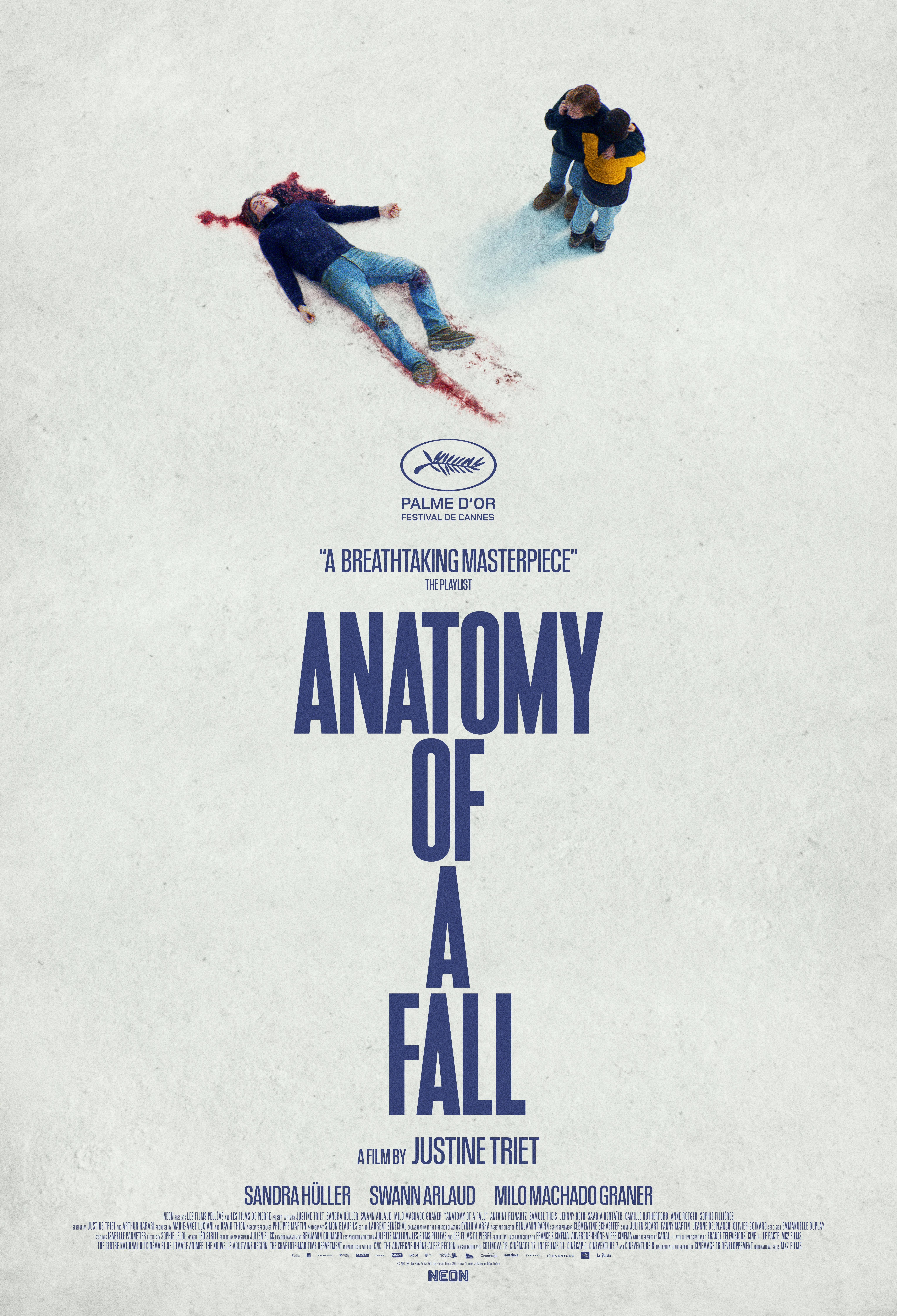
3) Anatomy of a Fall: Lord knows I have a few issues with the French. (Why they’re blocking every single restaurant entrance in Brooklyn with their strollers is an ongoing mystery.) But wow. When it comes to riveting, incisive modern-day courtroom dramas — there’s nobody better. In any other movie, making the phrase “Justice is blind” manifest as a literal blind child would be…a lot. But here, it totally works. Justine Trinet’s camera has a life of its own. The way it follows Snoop through the house. The way it glides around the courtroom, turning at the exact moment of impact. If the legal thriller renaissance is really underway, pray they’re all as good as Anatomy of a Fall.
2) How to Blow Up a Pipeline: There was an older woman who stood up after our screening to huffily ask the filmmakers what Neon (the distributor) was doing to offset the film’s carbon footprint and support climate action. (Unclear if she posed the same question to the directors of Ant Man: Qunatamania.) I was mortified. Thankfully, the filmmakers understood that first and foremost they were making a MOVIE, not writing a New Yorker article. In a movie, story trumps soapbox. Character trumps conscience. And if you really want to change minds, the last thing you do is jam some self-important screed down the audience’s throat. How To Blow Up A Pipeline succeeds because it’s a thrilling movie before it’s a manifesto.
Now, all that being said, How To Blow Up A Pipeline gets a lot of its power from smuggling politics into a vein-tightening heist film. This is exactly the kind of thing more filmmakers could be doing. Take a social issue and ground it in genre. Make a political talking point feel raw and fluttering. There’s trash in the street. Dirt on the bottles. Smog in the air. By making the world real, by making the problems fully felt, you can’t help but cheer when the pipe goes boom (spoiler, sorry).
How To Blow up a Pipeline came out the exact same weekend as Super Mario Bros. Mario made over a billion dollars. Pipeline made a 1/40th of David Zaslav’s salary. Brutal. For anyone lamenting the lack of social thrillers with the ethos of 70s films, support this movie! Pay $6.99 to rent the VOD. Hell, send a check to the filmmakers. Just watch it any way you can.
1) The Holdovers: Predicting the future never works out well (You think Spike Lee still wants us to invest in crypto??). But I’m gonna go out on a long, unsteady limb and predict that The Holdovers will become a classic. It might not be in the next five years, or even the next ten. But if it stays accessible it could develop a Shawshank-esque following. Because the story, and the filmmaking, and the performance — they feel that elemental, timeless and timely in any era.
It’s the story of three lonely people creating a fleeting community over Christmas break in 1971. But The Holdovers reverses the common coming-of-age tropes. There’s no loss of innocence. Here are three people who already have every right to be cynical, rediscovering that the person standing at the lectern or behind the stove has just as much history as they do. The Holdovers does that thing that only Alexander Payne can do. It’s heartbreaking and cutting, mannered and crass (“I’ve never cared much for candy cane. Plus I’m pre-diabetic”), artfully composed and completely alive in every frame.
In the end, it’s a film about the lies we tell. The lies that keep us going. The lies that hide our true nature. The lies that can liberate us, or resign us to exile. The lies that save us, and each other. At a time when so many people are lying for all the wrong reasons, The Holdovers makes a strong case for the kind lie. The lie that tells us what we need to hear, when we need to hear it. Sometimes it makes all the difference.
Superlatives, awards and random observations
Best Audience Members: The three, possibly stoned, shaggy high school bros who sat behind us at a weeknight screening of Theater Camp. About ten minutes into the movie, they stood up and frantically declared “Wait, what, this isn’t Oppenheimer!” before rushing out. This is why theaters MATTER.
Judd Hirsch Scene Stealer Award: Judd Hirsch in Showing Up. “My days are full. I get up. Do a little of this, little of that, before you know it, it’s time to watch TV again.” The namesake of this award does it again. He’s the jolt of energy every film needs.
Worst Film of the Year: Air. Incessant needle drops. An odd grey/green color scheme. Ben Affleck’s Little Orphan Annie wig. There are tons of reasons that Air is the worst film of the year. But the one I keep coming back to, the one that made it worthy of a call out, is just how generic it feels given that it cost 90 million dollars. Let me say that again. 90. Million. Dollars. All to create little more than a cut-rate TV movie (right down to the exterior shots buffeting every transition). Compare Air to a film like Moneyball and you can immediately see just how slipshod the whole thing is. Then, to add insult to injury, everyone involved is walking around like they’re cinema’s saviors. Huh? Air has no energy. No verve. It’s a milquetoast story of corporate executives. Whatever they’re selling, I’m not buying.
Best Strike Sign: Lots of nominees, but gotta go with this gem.
Special Achievement in Dad Arts: The History of the Eagles. By now, the Dad film canon is well-established. Crimson Tide, The Pride of the Yankees, The Blues Brothers — these films and so many more make up the full spectrum of films your Dad falls asleep to on Sunday afternoon. So, as a new father, I decided to start my journey into Dad-hood by watching a seminal work of Dad-lore, The History of the Eagles. It’s got everything an aspiring Dad needs: guitars, goatees, and tearful admissions of partying too hard. Is it a coincidence that almost immediately after finishing the full four hours, I started getting Instagram ads for Omaha Steaks? I think not.
Cash Grab of the Year: Children’s books. What to do if you’re an actor who craves adulation (and income) but is barred from acting due to the strike? You could write a bold memoir like Streisand. Promote a commercial like Chalamet. Or you could follow in the footsteps of McConaughey, Gyllenhaal, Odenkirk, and countless others by cranking out a middling children’s book with a vaguely genial message. You’ll get on the Tonight Show, make a little extra scratch, teach some kids about….Uncles. It’s a win for everyone, well, except the sucker who buys it.
Please, Clap Award: Bradley Cooper. Part of me worries that Bradley Cooper has been cursed by a wood sprite that won’t release his family from bondage until he wins an Oscar. The thirst coming off of him this awards season is…palpable. Somebody, please, get this man a statue, before he’s stuck “in conversation” forever.
Reply Guy of the Year: Owen Glieberman, film critic at Variety. Looking for someone to take a rhetorical slam all over a nuanced, crowd pleaser — Owen Glieberman is your man. How about somebody to praise a questionable film beloved by conspiracy theorists — Gleiberman can do it. Wait, what’s that? Wes Anderson has returned to form? Don’t worry. Gleiberman is itching to take him down a peg. I disagree with a lot of what he writes, but also kinda love that he’s writing it.
Villain of the Year: David Zaslov. If anyone gave Elon Musk a run for their money as caricature-level villain this year, it’s the guy who started listing directors as “creators”. Between hosting parties where guests openly lamented a lack of mega-yachts, shelving movies just for the tax break, and discarding a beloved brand (HBO) for one that sounds like a discount car battery (Max), Zaslov read the Sumner Redtsone biography, and loudly proclaimed, hold my beer.
Chinstrap Beard Award: Indiana Jones and The Dial of Destiny. Unless it’s for religious reasons, the chinstrap beard is not a good idea. And just like the chinstrap, rebooting Indiana Jones is not a good idea. Between the muddy cinematography, septuagenarian hero, shoddy de-aging, and an embarrassing final sequence — Dial of Destiny becomes more painful the more you think about it. Don’t get me wrong, I love James Mangold. He made one of the great superhero films (Logan), not to mention one of the great neo-westerns (3:10 to Yuma). Why he agreed to do this, I’ll never know. Then again, maybe the answer is on his chin.
New Rebels on the Backlot: Damien Chazelle, Barry Jenkins, The Daniels, Greta Gerwig, The Safdies. They’ve all got a distinct sensibility. They all came of age with the early internet. And they’ve all gone through the A24 machine and moved on to bigger studio projects. Someone is going to write a book on their generation (and this time they won’t all be white guys).
Okay, there it is, the year in film all tidy and neat. Thanks as always for making it this far down the page (even if you skimmed). Here’s to another year of box office saviors, streaming disasters, and the occasional horned up tennis pro.
Later,
Will


 grain&noise